
Tracking the Cycle: Why and how women monitor their menstrual cycle
Updated: May 8
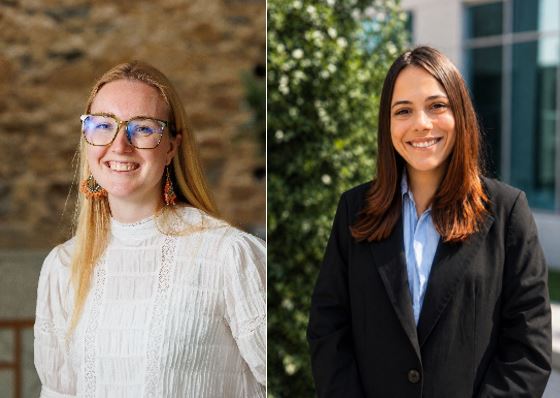
By Eline de Jager MSc BSc and Evgenia Angelidi MSc BSc
Did you know that the average women will spend approximately seven years of their life menstruating? Despite being such a constant presence, the way our bodies behave each month can often feel like a guessing game. You might wake up feeling completely drained or notice your mood shifting without an obvious cause, only to realise a few days later that your period was just around the corner.
While cycle tracking is often associated with prediction of ovulation and menstruation, our data suggest women are increasingly using it to interpret patterns in health, energy, and performance. To find out how women are navigating this, a research team of the CycleSync Project at University College Dublin, surveyed over 400 women aged 18-50-yr, with an average age of 30 years. We are interested in this because understanding how women interact with their cycles is the first step toward creating more inclusive health research and closing the long-standing “gender data gap” in sports and medical science. The results offer a fascinating glimpse into the modern ritual of “cycle tracking” and how it is shaping women’s lives.

Before diving into the data, it helps to understand what we are actually tracking. Menstruation is the shedding of the uterine lining, marking the start of a new cycle. Ovulation, which typically happens mid-cycle, is when an egg is released from the ovary. Some women use apps to track their menstrual data, while others use it to predict their period and fertile window. Prediction tools use your past data to estimate when these events will happen. While many associate tracking solely with these two milestones, our data suggest that women are increasingly using it as a broader health compass.
Tracking is no longer a niche activity; it has become a fundamental part of daily life for many women. Our survey revealed that a striking 80% of respondents currently monitor their cycles. For many, this is a long-term lifestyle behaviour as nearly half of these women (46%) have been logging their data for more than five years.

This consistent commitment is driven by specific personal needs. When asked why they track, the most popular answer among participants was “menstruation tracking and prediction.” (n = 196). Most women simply want to know exactly when their period will arrive so they can plan their lives and social calendars. While knowing “when” is the top priority, the motivations often go deeper into daily well-being. The survey highlighted two other major drivers “symptom tracking and prediction” (n = 27) and “avoiding pregnancy” (n = 16). By noting down physical changes like headaches or energy dips, as well as emotional shifts, women can begin to anticipate these patterns rather than being blindsided by them.

We are living in an era where digital health has transformed how we manage our well-being. From tracking steps to monitoring sleep, technology provides us with a continuous stream of personal data. However, this digital transition isn’t without its hurdles. While apps and wearables make data collection seamless, they also raise important questions about accuracy, data security, and how our most intimate health information is handled.
Today, technology is the clear leader for monitoring these changes. The survey found that over half of respondents (56%) use dedicated phone apps, while 22% rely solely on wearable devices like smartwatches. Interestingly, 14% still prefer “analogue” methods, such as paper journals, proving that sometimes the simplest tools are the most reliable.
The market for these tools is surprisingly diverse as can be seen in the next graph. While Flo and Clue are the most popular apps, many women use niche options that cater specific needs. For those who prefer wearables, Garmin emerges as the top brand, followed closely by Apple and Fitbit.
As we log everything from our heart rate data to our menstrual cycle data, the question of “who sees this data?” becomes vital. Our research explored how women feel about sharing this information for scientific purposes. The results were encouraging: 75% of respondents said yes to sharing their data for research, provided certain conditions were met.
The survey showed that transparency is the best way to build trust regarding data sharing. Women were most willing to share their data when they were given the option to remain anonymous (253), a clear explanation of how the data will be used (245), and a clear breakdown of the potential benefits of the research (211).

While the willingness to share data is high, the quality of data depends on the accuracy of the tools. Around 73% of women in the survey felt their chosen tool predicts their menstruation accurately. However, this leaves more than one in four women feeling that their apps are missing the mark, a significant gap that often stems from how these apps are programmed.
Many popular tools rely on calendar-based predictions, which assumes a “normal” or consistent cycle length. For women with irregular cycles, PCOS, or those navigating perimenopause, these rigid algorithms can be misleading. It is important to remember that an app alone cannot confirm if you have had an ovulatory cycle; it can only be estimated based on dates. To truly verify ovulation, objective testing (such as urinary tests) is required.
Our participants specifically highlighted that even major brands have room for improvement. Common apps like Garmin, Clue and Flo were occasionally flagged for being inaccurate. This suggests that while these devices are excellent for logging data, they often struggle to interpret the nuances of individual hormonal patterns.
Caution is need when relying solely on these digital predictions. For those without a “typical” textbook 28-day cycle, the challenge is finding a tool that learns from their unique biology rather than trying to force their data into a pre-set template. Improving these algorithms for women with irregular cycles or hormonal imbalances is essential to ensure that tracking remains a source of empowerment, not confusion.
The future of women’s health
As we look to the future, the success of digital health hinges on one critical factor: trust. For decades, women’s health has been under-researched and underserved, leading to a “gender data gap” where medical advice is often based on studies conducted primarily on men.
Tracking your cycle is a powerful way to reclaim your narrative but it also places incredibly sensitive information into the hands of technology companies. Our survey highlights that while women are eager to contribute to science, they require transparency and bodily autonomy in return.
When you log your menstrual cycle and symptoms, you aren’t just managing your own week. You are part of a massive, collective shift in how we understand the human biology. By aggregating anonymised data from millions of diverse cycles, researchers can finally move past the standard 28-day myth.
This bigger picture approach that we are using in our CycleSync project allows us to identify how environmental factors, stress and different life stages (like puberty and perimenopause) actually affect the female body. The goal of the CycleSync project is to ensure that the next generation of tools doesn’t just predict a date, but provides genuine, personalised insights that help women thrive in their careers, their sport and their daily lives.
Ultimately, our survey shows that menstrual cycle tracking has evolved from a simple calendar note into a central pillar of women’s health. It is a powerful tool for self-awareness and empowerment. Whether you use a high-tech watch or a simple journal, the act of paying attention to your body’s signals is invaluable. As technology evolves, we hope to see even better accuracy and deeper insights for all women.
Join the conversation
Are you a regular tracker, or are you thinking about starting? We would love to hear your thoughts!
Get involved: if you are a female athlete or a regular tracker, your insight could help advance our research.
Keep your eyes out for our website going live soon: Cyclesync.ie
Together, we can advance research and give women more knowledge, control, and confidence in understanding their bodies.
Author Bios

Eline de Jager is a Sport Scientist and PhD student at University College Dublin, where her research focuses on the effects of female hormones on wearable-derived metrics. She has contributed to the field through several publications and is passionate about advancing sport science in a way that is more inclusive and representative of women. You can follow her work on Instagram @SciencebyEline or connect with her on LinkedIn, or via email at eline.dejager@ucdconnect.ie. Outside of her academic work, Eline is just as active as the subjects she studies. She enjoys a combination of sports and outdoor activities, embracing the lifestyle that reflects her dedication to movement, performance, and well-being.

Evgenia Angelidi is a Data Scientist and Research Engineer at University College Dublin, with a background in Sports Science and a master’s in data science. She is particularly interested in health technology and digital innovation, and how machine learning can be used to turn data into meaningful insights that improve people’s lives. Outside of work, she is actively engaged in endurance sports, with a particular focus on long-distance cycling and outdoor activities.
Blog editor: Dr Tess Flood
Blog admin: Dr Jacky Forsyth


Comments