
Beyond the Whistle: Why female football referees must not be left behind

Following the Lionesses’ back-to-back UEFA Women's Euro victories in 2022 and 2025, English women's football entered what has been described as a “new age”. Participation increased by 140% for girls under 16 and 53% for women over 16. This surge in numbers resulted in over 2.3 million new female players in the game.
Yet, while the playing field is levelling, gender equality for referees remains stuck on the sidelines. In England, there are 15 times more registered male referees than female referees. Closing this gap is critical, not simply for fairness but to strengthen the quality, diversity, and future of the game.
From Kit Cupboards to Kick-off
The whistle felt cold and heavy in her hand. Stepping onto the pitch as the referee was a fragile victory, hard-won against quiet cynicism. The sting of being told to get changed in a storage cupboard lingered, as did the muttered doubt: “but she’s a girl”. She knew that every action would be scrutinised. Respect was not assumed as it would be for her male counterparts, she would have to earn it.
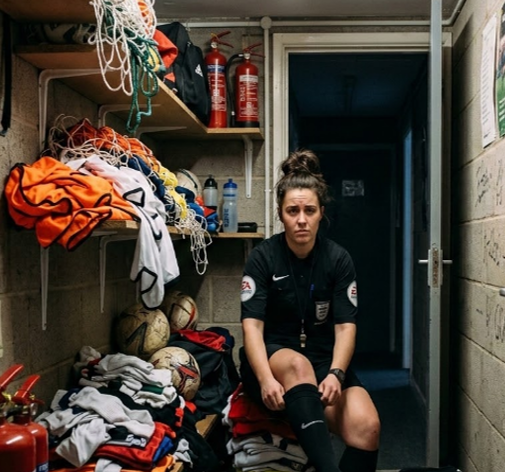
Behind the growth of women’s football lies a harsh reality for female referees, where gendered stereotyping continues to challenge competence, authority, and belonging within the game. Football’s longstanding association with physical dominance and aggression have historically framed refereeing as a masculine role.
Drawing on interviews with eight female football referees, this qualitative study explored the cultural, organisational, and social factors influencing women’s experiences in officiating, while identifying opportunities to improve recruitment, retention, and progression.
What is holding our female referees back?
“A player making comments about my gender and physically pushing me over for it during a match, that is a personal attack”
The study identified systemic and social barriers pushing promising female officials out of the game. The referees described persistent challenges to their credibility and authority within football. Condescending praise, sexist comments, and overt abuse were normalised, contributing to a culture of disrespect. These experiences reflected a broader masculine culture within football that continued to question the legitimacy of female officials.
This culture was reinforced by male-centric infrastructure, which intensified the officials' feelings of exclusion or not belonging. Basic needs of female referees were frequently overlooked, which was evident through the stories of participants who described the inadequate changing facilities and in some cases the humiliation of being directed to storage cupboards to prepare for matches.

Beyond the match-day environment, organisational support was inconsistent, described as a ‘postcode lottery' of mentorship support. Development opportunities were influenced by the different priorities and interest of County Football Associations. This meant that some counties offered established support networks and others left officials isolated and alone. This inconsistency was viewed as a significant organisational barrier limiting retention and progression.
The referees also described the interaction of age and gender as intersectional discrimination. Younger officials (aged 14–20) reported frequent and severe discrimination, leaving them vulnerable to abuse, isolation, and dropout. These findings highlight the need for targeting interventions to ensure young female referees are supported and protected within the sport.
What is driving our female referees forward?
“Having female mentors, it does provide a lot more support and a lot more help because there's a lot of differences between being a man and a woman, especially within football.”
Despite the challenges, the research identified clear facilitators that helped female officials remain in the game. Participants described women’s football as a welcoming and supportive culture, offering a distinct contrast to the aggression and hostility they experienced within the men’s game. This inclusive environment was a key factor in both attracting and retaining female referees, with many choosing to officiate within women’s football entirely.

Female role models and mentors were described as crucial drivers of progression and confidence. Seeing other women succeed in officiating helped younger referees view the role as both achievable and rewarding. Female-to-female mentorship was particularly valuable providing relatability allowing aspiring officials to connect with someone who genuinely understood the gender-specific challenges they faced. These relationships helped build confidence and demystify progression through officiating levels.
Alongside female mentorship, supportive male peers played a vital role. Participants described male allies as helping to advocate for equal opportunities, challenge outdated gender stereotypes, and promote respectful and inclusive environments. This collaborative atmosphere contributed to a stronger sense of belonging within the game.
Finally, peer support networks were essential for long-term retention and wellbeing. Having trusted individuals to share the experience helped referees navigate difficult situations, cope with criticism from the public, and develop the resilience needed for a long and successful career. These support systems were critical in helping female referees remain committed to the sport, despite ongoing difficulties.
Moving the Goalposts
“A lot of young girls have quit, because they've had an experience that's not very nice, but then they've been alone in it. Whereas if there was a support group that they could go and speak to, they might have of been able to learn from someone more experienced”

If football is serious about retaining the next generation of female officiating talent, a collective effort is needed to change how refereeing is perceived and experienced. Addressing the barriers facing female officials requires action at cultural, organisational, and interpersonal levels of the game:
Minimising Barriers
Tackle the culture of abuse and 'boys' club' mentality. Discriminatory behaviour towards female referees should no longer be dismissed as “just banter”. Governing bodies, coaches, players, and supporters have a responsibility to challenge behaviour that undermines the credibility and authority of female referees.
Organisational inconsistencies. The current “postcode lottery” of support across County Football Associations creates unequal access to mentorship, development opportunities, and safe support systems. Standardising gender-specific resources across all counties would help ensure female referees receive equitable opportunities regardless of location.
Equitable facilities. Clubs should be supported and held accountable for providing safe, private, and dignified changing spaces for female officials. Addressing these physical barriers is essential to creating environments where women feel respected and valued within the game.
Maximising Facilitators
Formalising female mentorship programmes. This will provide relatable guidance, strengthen confidence, and create stronger pathways for progression. Increasing the visibility of female referees for younger girls to see officiating as both achievable and rewarding.
Male allyship. Male coaches, players, and officials should be encouraged to actively challenge outdated stereotypes, advocate for equal opportunities, and contribute to more inclusive football environments.
Structured peer support networks. Online and in-person communities could provide safe spaces for female officials to share experiences, seek advice, and support one another through the challenges of officiating. These networks may be particularly valuable for referees working in areas where female-specific training groups are limited.
Finally, the welcoming culture often experienced within women’s football offers an important model for the wider game. Promoting collaboration, respect, and belonging across all levels of football will play a significant role in improving both retention and progression for female referees.
Breaking the Grass Ceiling
Reflecting on the progress made in women's football, we must ensure female officials are not left behind. The England Football Association's goal to increase female referee numbers is ambitious but achievable if the unwritten gendered rules of the game are addressed. Creating inclusive environments and providing targeted support will ensure that every woman who picks up a whistle has a genuine opportunity to succeed.

The whistle felt familiar, a reassuring weight in her hand. Stepping onto the pitch as the referee was a shared joy, a moment of pride reflecting the system's support. The changing room was bright and welcoming and the appreciative murmurs from the crowd were a warm, encouraging hum. She would apply her expertise and impartiality with every call, knowing the entire league had her back.
Get in touch: If you are a current or former female referee, share your experiences in the comments below. What barriers did you face, and what support helped you succeed?
Be an Ally: If you are a male player, coach, or official, commit to challenging gendered abuse and supporting female officials in your games. Share this post to show your support!
Read More:
o For deeper insights into the FA's strategy and progress, check out this related article.
o Read the CASES Abstract for this work
o Read articles associated with this work: Gubby & Martin, 2024, or Reid & Dallaire, 2020
Share your thoughts: If you have any questions let us know.
Author Bios

Yasmin Williams is an MSc graduate in Sport and Exercise Psychology, currently commencing her PhD. Her work focuses on the lived experiences of women in sport, exploring the intersection of gender, environment, and physical activity. Yasmin is interested in examining how structural inequalities shape athletic identity and psychological well-being, particularly among marginalised groups.
Contact: 230464@hsu.ac.uk

Dr Stephanie Tibbert is a Senior Lecturer in Sport and Exercise Psychology. Her work explores the psychological experiences of those involved in competitive environments, with a particular focus on the assumptions underpinning high-performance in elite sport. Stephanie is interested in how these taken-for-granted ideas shape athlete experiences and opportunities, particularly in relation to gender.
Contact: stephanie.tibbert@hsu.ac.uk
Blog editor: Dr Tess Flood
Blog administrator: Dr Jacky Forsyth


Comments